

AI Didn’t Steal Your Creativity. You Handed It Over.
This one’s personal. And a little uncomfortable.

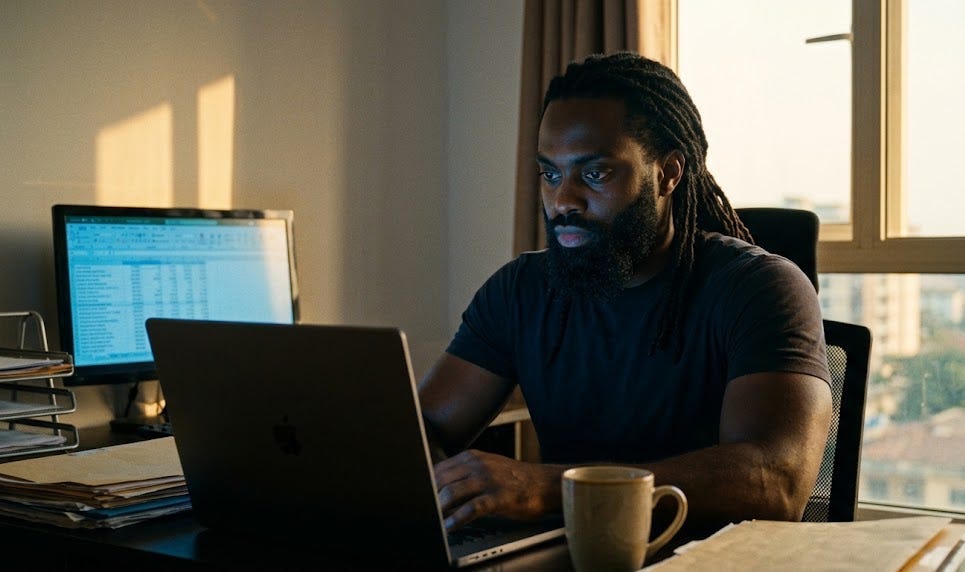
I had a conversation this week that I haven’t been able to shake.
A friend and I were talking about AI and creativity — not the usual “will AI replace us” debate. Something more specific and more uncomfortable.
We were talking about how you can start something with a clear vision — raw, genuine, yours — and then outsource the creative problem-solving to AI. And somewhere between the prompt and the output, the thing stops being yours.
You get something back that’s polished. Well-structured. Technically impressive.
And completely hollow.
We started calling it quality garbage.
Garbage that looks so good you almost don’t notice it doesn’t sound like you. Doesn’t feel like you. Doesn’t carry the specific weight of what you actually meant to say.
Here’s what actually happens.
You start with your rawness. Your naiveness. Your genuine attempt to figure something out. That’s the creative spark — the part that makes what you build yours.
Then you hit a wall. And instead of pushing through it, you hand the wall to the AI.
“Here, solve this.”
And it does. Efficiently. Cleanly. Without your fingerprints on it.
So now you have two separate people who built the same thing. The person who started it — you, with your vision and your voice — and the tool that finished it, with its patterns and its training data.
The seam shows. Every time.
If this is landing — share it with one person who’s been staring at AI output wondering why it feels off.
The problem isn’t using AI. I use Claude every day. I build with it, write with it, think with it.
The problem is outsourcing the creativity instead of the execution.
There’s a difference between asking AI to help you get where you’re going and asking AI to decide where you’re going.
One keeps you in the work. The other removes you from it.
5 ways to stay in your own work
1. Start with your brief, not a blank prompt
Before you open ChatGPT or Claude, write down in your own words: what am I trying to say? What’s the feeling? What does the end result need to do?
Your creative brief goes in first. AI responds to it. Not the other way around.
2. Use AI for options, not answers
Ask for five title ideas. Ask for three different angles on the same argument. Ask it to poke holes in your thinking.
Use it to expand your options. Make the final call yourself. Every time.
3. Rewrite everything in your voice
If AI writes “this is an important shift in the industry” — stop. What would YOU say? Maybe it’s “nobody’s talking about this clearly.” Maybe it’s “I watched this happen in real time.”
Your voice is the thing AI can’t replicate. Don’t let it disappear in the edit.
4. Put your life in it
AI has no lived experience. It has no 2am money anxiety. It has no Lagos traffic. It has no specific conversation with a specific friend that changed how you see something.
That’s yours. Put it in. Every piece.
5. Read it out loud before you ship
If you can’t read it out loud in your own voice without it feeling weird — it’s not done. The AI version of you sounds slightly off. You’ll hear it.
Edit until it sounds like you talking, not a well-trained model approximating you.
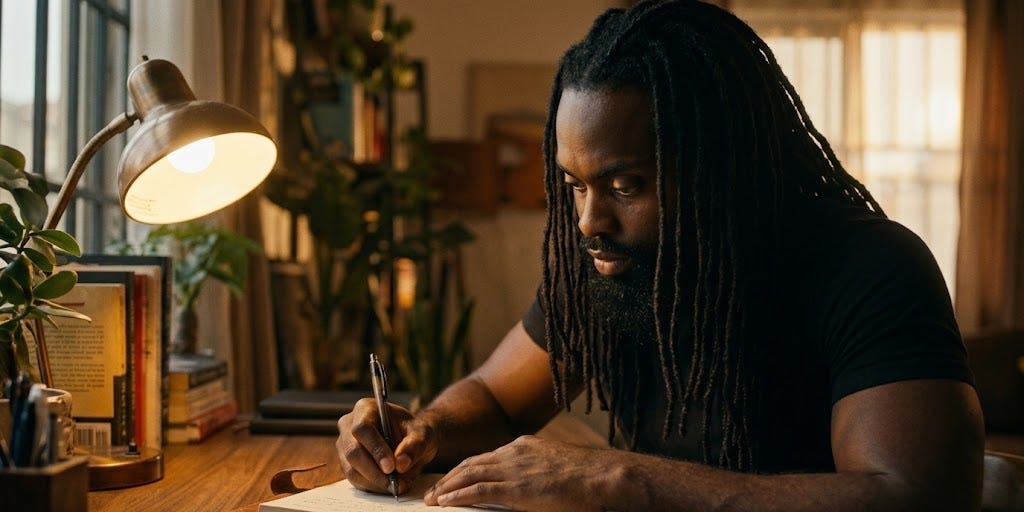
The goal isn’t to avoid AI. The goal is to make sure the thing you ship has you in it from concept to final word.
No separation. No seam. No quality garbage.
Just your work — with better tools.
Where have you felt this — that moment when something you made stopped feeling like yours? Drop it below.
— Alex, MBM
Every Monday — honest writing from someone building in the middle of all this. Subscribe below.
If you missed my last article, no worries — read it here

Nice write, it simply says in my own understanding AI shouldn't think entirely for you. Question it's output and refine it
I love this piece! It packed with honesty & tips and a great title to match. This would be so useful to those who do use AI to write their posts. I believe AI can be useful but shouldn't take away the core element of an individual's own ideas, questions, knowledge and experience.
It's far more interesting reading the rawness about people's experiences, lessons learnt, questions and doubts rather than a polished piece that's clearly written by AI.
Keep up the great work! This was a gem!