

Building in Public Taught Me a Hard Truth
The Smartest Person in the Room Is Rarely the Boss

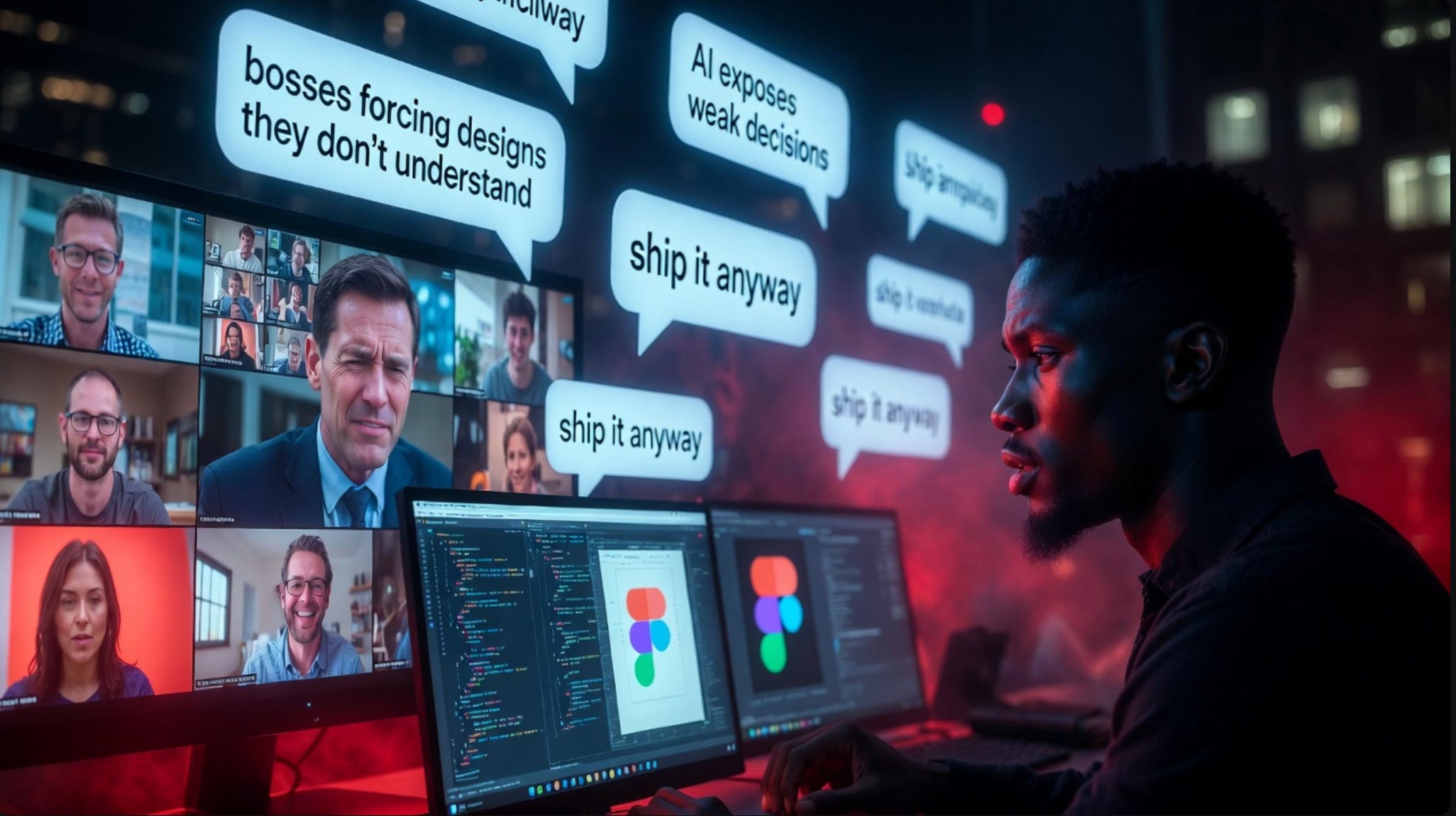
The conversation wasn’t even meant to go there.
We were in a Twitter Space, just vibing about building in public. AI projects. What’s working. What’s not. People sharing screenshots, war stories, half-broken demos. The usual.
Then someone said something that stopped the room for a second:
“Why do bosses keep forcing designs and decisions they don’t actually understand?”
Silence.
Then everybody started talking at once.
Designers complaining about being overridden.
Developers laughing through pain.
Founders defending “vision.”
PMs stuck in the middle, catching stray bullets.
And that’s when it clicked for me:
This isn’t a design problem. It’s a power problem.
When Authority Replaces Expertise
Here’s the uncomfortable truth nobody likes to say out loud:
Sometimes the person with the least context makes the final decision.
Not because they’re evil.
Not because they’re stupid.
But because hierarchy gives them confidence they haven’t earned in that domain.
I’ve seen it from both sides Nigerian hustle culture and UK corporate structure and even in the US. Different accents, same issue.
A developer understands system constraints, edge cases, performance tradeoffs.
A designer understands user psychology, spacing, friction, flow.
Yet somehow, the final call comes from someone whose strongest qualification is “I’m the boss.”
And when it goes wrong?
The team carries it quietly.

Building in Public Changed the Game
Before building in public, bad decisions could hide.
A feature shipped late?
“Engineering issue.”
A UI feels awkward?
“Users don’t get it.”
Performance is trash?
“We’ll optimise later.”
But when you build in public — with AI projects, open demos, public repos, timelines on X — the excuses evaporate.
Everyone can see:
what was suggested
what was ignored
what shipped anyway
and what broke exactly as predicted
AI didn’t cause this shift.
AI exposed it.
AI Is the Mirror, Not the Villain
People love blaming AI for everything lately.
“AI ruined design.”
“AI made devs lazy.”
“AI is killing creativity.”
No.
AI just made weak decision-making louder.
When a developer says, “This will break in production,”
and the boss says, “Ship it, AI will fix it later,”
that’s not innovation — that’s delegation without understanding.
When a designer says, “This flow adds friction,”
and leadership replies, “I like it this way,”
AI doesn’t save you from bad taste.
It just ships it faster.
The Real Cost Isn’t Bad Code — It’s Burnt Teams
Here’s what doesn’t show up in sprint reports:
Developers stop caring
Designers stop pushing back
Smart people go quiet
Eventually, smart people leave
Not because they can’t do the work —
but because they’re tired of explaining gravity to people who think they can fly through vibes.
This isn’t just tech.
Non-tech readers feel this too.
You’ve seen it at work:
The expert warns.
Management ignores.
The problem happens.
Management asks, “Why didn’t anyone say anything?”
Everyone did. You just didn’t listen.
What the Best Teams Do Differently
The healthiest teams I’ve seen don’t worship hierarchy.
They respect proximity to the problem.
They ask:
Who actually lives with this decision?
Who fixes it at 2am?
Who understands the second-order effects?
And then — this is the hard part —
they let those people lead.
Not forever.
Not without accountability.
But with trust.
Before we even talk more AI, pause here for a second.
If this resonates — if you’ve lived this —
like this, save it, subscribe.
Not for the algorithm. For the signal. It tells me we’re talking to the right people.
Because this is bigger than tools.
AI fits beautifully when used right.
AI helps you prototype faster.
Test ideas quicker.
Kill bad assumptions earlier.
But AI doesn’t replace judgment.
And it definitely doesn’t replace humility.
A Quick Heads-Up (Building in Public Update)
This is actually why we’re making changes on our end too.
Simon and I have started working through our Build in Public plans for this year, both personally and for AIDevelopia. We’re rethinking decisions, tightening focus, and doing this properly.
That includes a shift we’ve been sitting with for a while:
Developia is moving from a generic community platform
to a Talent Marketplace & Project Showcase.
Less noise.
More signal.
Real work. Real people. Real outcomes.
We’re also rounding off our Discord feature — and honestly, I’ve never been more excited about it. The Discord is opening up again, and we’re keeping it intentional.
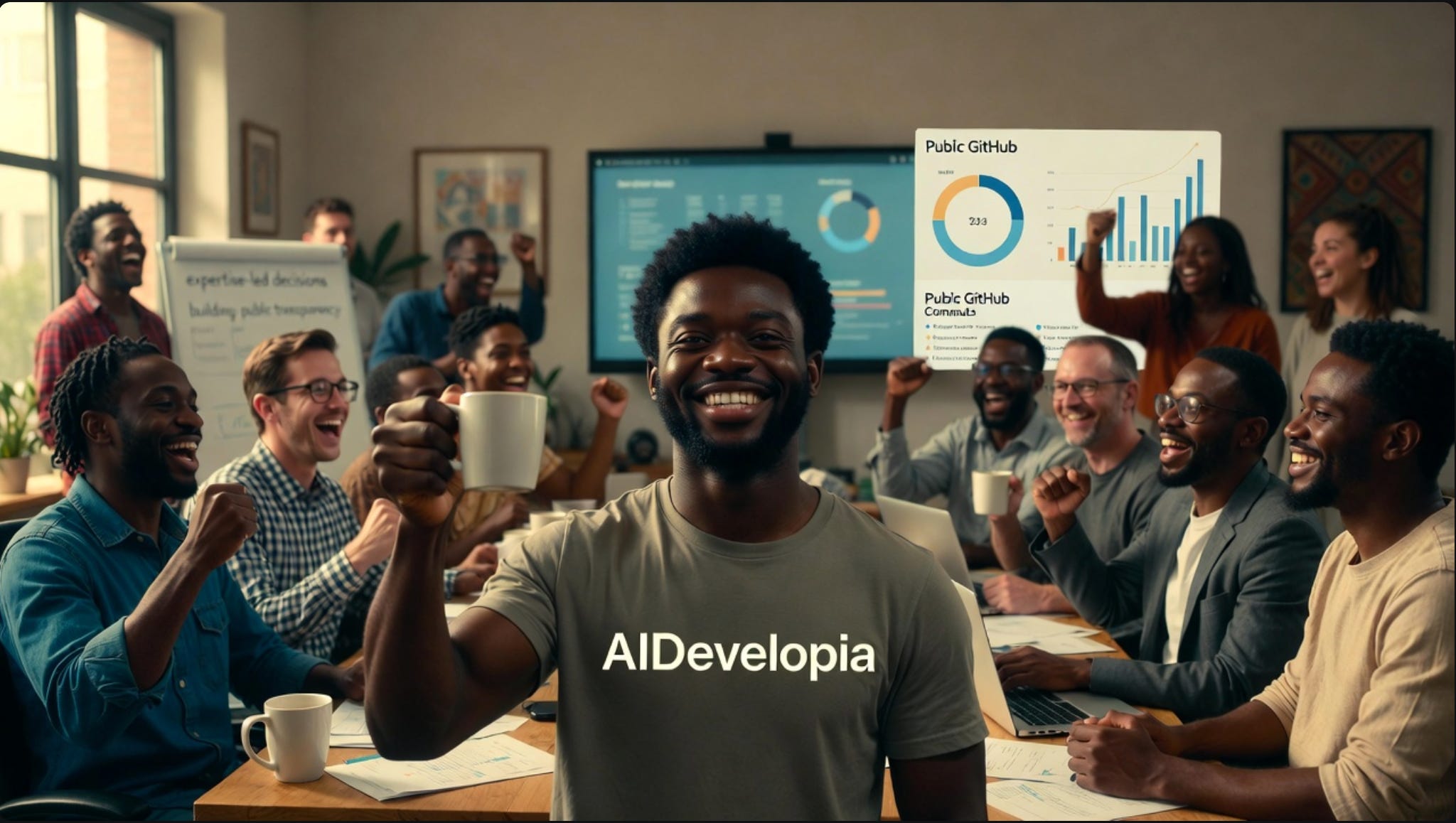
We’re opening the door to like minded people to join me and the 131 people on developia , we want like-minded builders who actually care about craft, thinking, and doing things the right way.
A Quiet Lesson From Building in Public
Building in public has a way of humbling everyone.
Your ideas meet reality.
Your confidence meets users.
Your “vision” meets bugs.
And slowly, the loudest voice in the room stops being the most important one.
That’s the era we’re entering.
Not boss-led products.
Not AI-led products.
Expertise-led products.
And if you’re a leader reading this
the strongest move you can make right now isn’t control.
It’s listening.
Because the smartest person in the room might not have the title.
But they probably have the answer.
Let’s grow — properly — this year.
☕ If this hit you, consider buying me a coffee or joining the Aidevelopia Discord.
👉 Join the crew here →
So if you’ve been waiting for a sign to start exploring AI beyond prompts — this is it.
👉 Try Aidevelopia free for 30 days
👉 Build your own AI bot or community assistant
👉 And join us on Discord — https://discord.gg/PRKzP67M
If you missed my last article, no worries — read it here
