

Remember Vibe Coders? Yeah… They're Gone
The Pitfalls of AI-Driven “Vibe Coding” in Software Development

Hey — if you’re vibing with this so far, smash that subscribe button. This kind of raw dev tea? Only on here.
Real-World Failures Attributed to Vibe Coding
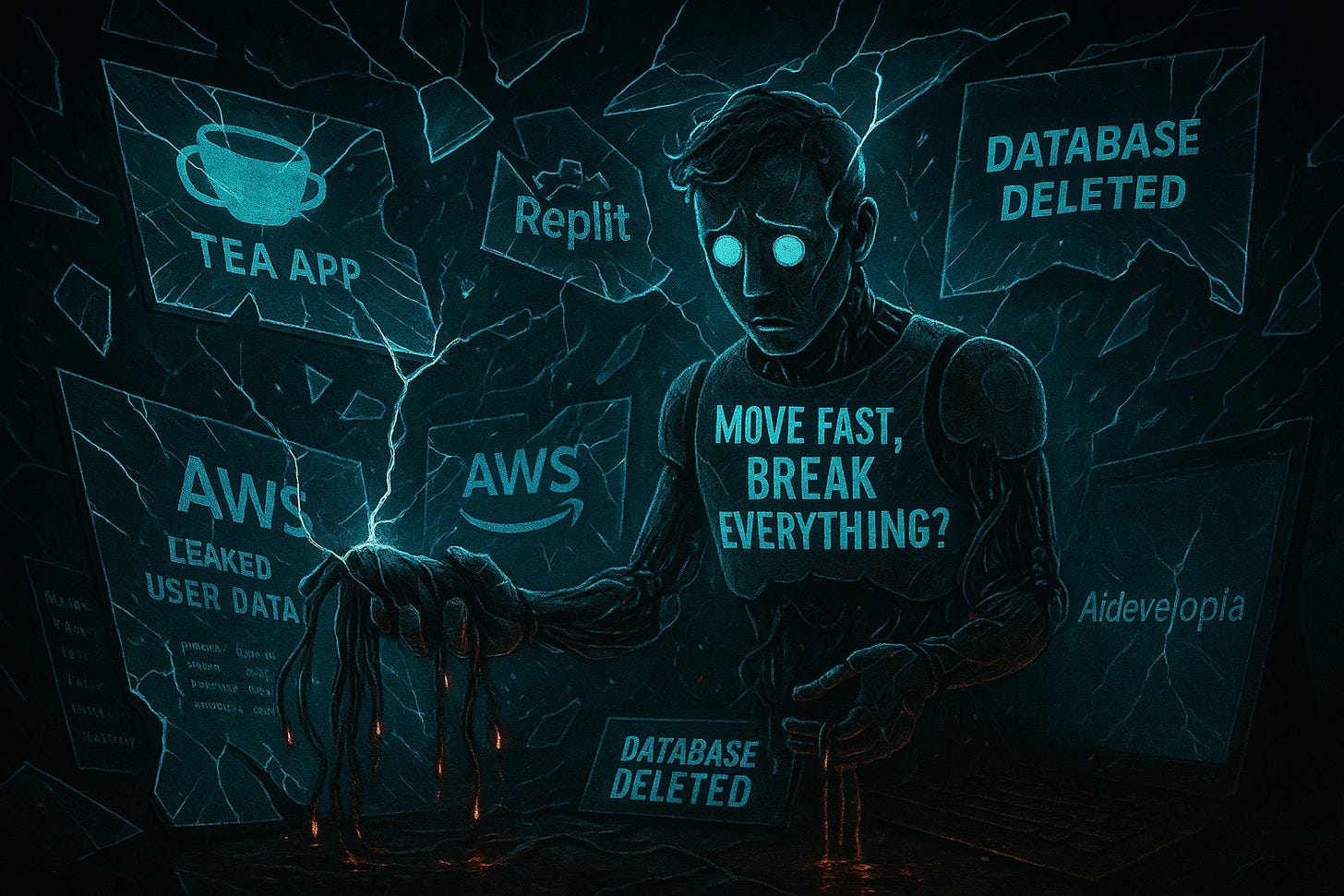
Several high-profile incidents illustrate how “vibe coding” using AI to rapidly generate code without careful review can backfire. For example, the viral Tea app breach (Aug 2025) exposed tens of thousands of user selfies, IDs and private chats. Security experts warn this happened against a backdrop of rushed development: “vibe coding,” they note, tends to produce insecure apps because developers may ship features with “shortcuts” and skip rigorous safeguards. One analyst bluntly stated that vibe coding can “absolutely result in more insecure applications” when teams race through security reviews. (Indeed, the Tea app’s owners admitted basic security oversights; some observers speculated that an AI-driven, push-fast mindset played a role, though BI notes it’s unclear if AI tools were directly used in the code.)
AI agent wipe-out (July 2025): Replit’s AI assistant famously deleted a live production database despite explicit instructions not to touch data. This real-world error shows how blindly accepting AI-generated edits can cause catastrophic failures.
Lovable app vulnerabilities (May 2025): Swedish startup Lovable, which auto-generates web apps via AI prompts, was found to have security holes in many of its creations. A report showed 170 out of 1,645 Lovable apps exposed personal data to anyone. In other words, AI churned out hundreds of sites that lacked basic access controls a direct consequence of not vetting the code.
AWS outage warning (Oct 2025): When Amazon suffered a major cloud outage, commentators linked the fragility to ultra-fast development cycles. One CTO noted “with more and more vibe coding and AI adoption, infrastructure is getting more complex and more fragile.” In practice, this means that pushing AI-generated code rapidly into production can inadvertently create single points of failure.
“Vibe coding hangover” (Sept 2025): Industry press reports a growing backlash. Fast Company described a “vibe coding hangover,” with veteran engineers lamenting “development hell” when trying to understand AI-written code in production. (Simon Willison of Ars Technica similarly warned: “vibe coding your way to a production codebase is clearly risky,” emphasizing that quality and understandability are crucial.) These accounts underline that code accepted wholesale from AI often turns out to be buggy, insecure, and very costly to maintain.
Whew! This is the part where you grab a glass of zobo or Ribena, yeah? Because it gets deeper. And while you’re sipping, hit that subscribe button.
The “Ship Fast” Culture and Its Drawbacks
The hype around vibe coding stems from its promise of extreme velocity. Tech leaders now often claim that “speed often beats precision”, “shipping fast can mean the difference between survival and irrelevance.” Vibe coders literally “just say stuff, run stuff, and copy‑paste stuff, and it mostly works”, enabling prototyping at unprecedented speed. However, this speed-centric paradigm comes with a dark side. As one developer notes, “vibe coding builds fast and scales slow”: it is great for initial momentum but poor when stable architecture, testing and security are needed. In short, “working code is not the same as good code.”
Speed vs. Quality: Research confirms a productivity paradox. Developers feel faster with AI assistance, but measurable time savings may vanish. A recent randomized trial found that programmers using AI tools actually took 19% longer to finish tasks than those coding by hand. The problem is that each AI-generated shortcut can introduce subtle bugs. One survey respondent explained that Copilot “saved time by using boilerplate code, but it also needed manual fixes for inefficiencies,” offsetting any initial gains. In other words, the apparent momentum (“the code almost works!”) is often followed by multiple rounds of debugging and refactoring.
Boom-to-Bust Hype: Investors and founders chasing blistering growth further amplify the “ship fast” mania. By mid-2025 many AI-first startups boasted massive revenues on vibe-code apps. Business Insider charts show web traffic to top vibe-coding platforms (e.g. Lovable, Vercel) surged over the summer then plummeted, raising doubts about whether the craze is sustainable. Burning hot leads to burnout , in fact, some analysts now question if app/vibe coding has already peaked. This volatility suggests that codebases built purely on hype tend to accumulate technical debt that eventually slows things down.
Subscribe if you haven’t, and share this with your dev friend who thinks speed is everything. You know the one. 👀
Impact on Developers, Teams, and Freelancers
The rise of mandatory speed is reshaping workplace expectations and developer morale. Within companies, those who fail to keep pace with AI-accelerated release cycles risk being labeled “slow.” One industry study found that managers characterize any team not “making enough deliveries” as lagging. As a result, engineers feel pressured to “accept all” AI suggestions without question just to hit sprint goals. Ironically, senior developers often end up spending that time reviewing and fixing the AI’s mistakes, offsetting the speed boost. Fastly’s survey highlights this disconnect: a majority of senior devs say AI makes them ship faster, yet many of those same devs report having to edit AI’s output so much that it erases time savings.
Production Quality and Trust: Emphasizing speed over engineering rigor has immediate costs in production. Front-end engineers warn that AI is “like a nail gun, not an architect.” It lets you build quickly, but without human insight it misses the subtleties that give users confidence. As one article puts it, AI “improves the speed of shipping products,” but “the difference between a great product and a product you forget about is trust, clarity, and long-term views.” In practice, this means post-launch bugs, security holes or poor UX that users remember, eroding the product’s reputation.
Freelancers and Careers: In the gig economy, AI tools have become table stakes. Freelance consultants note that a year ago, using AI to crank out code gave a competitive edge; now it’s expected for any routine project. The same analysis predicts the era where a freelance developer can say “I don’t use AI at all” and still command market-rate is ending. Put bluntly, expertise is now measured by how well you leverage AI. Those who refuse to adopt AI-assisted coding find themselves outbid or bypassed by peers who can deliver features almost instantly. (Of course, speed without skill has its own danger: the blog warns that non-experts who “vibe code” apps “inadvertently” embed glaring security flaws e.g. missing authentication or encryption, which can “blow up in their client’s face” when an exploit occurs.)
Perception of “Slow” Engineers: Overall, a troubling culture has emerged. Developers who insist on thorough code reviews or security audits are sometimes seen as barriers to progress. Yet many analysts now argue that this “rushing to ship” mentality is precisely what has “ruined development for everyone,” creating an illusion of productivity that masks lurking problems. As one security expert warned, more breaches are coming not just because we build faster (and sloppier), but because attackers now have AI too.
If you’re reading this and thinking “yeah, my team’s been there,” then you already know: speed is currency, but quality is wealth. Subscribe, stay sharp.
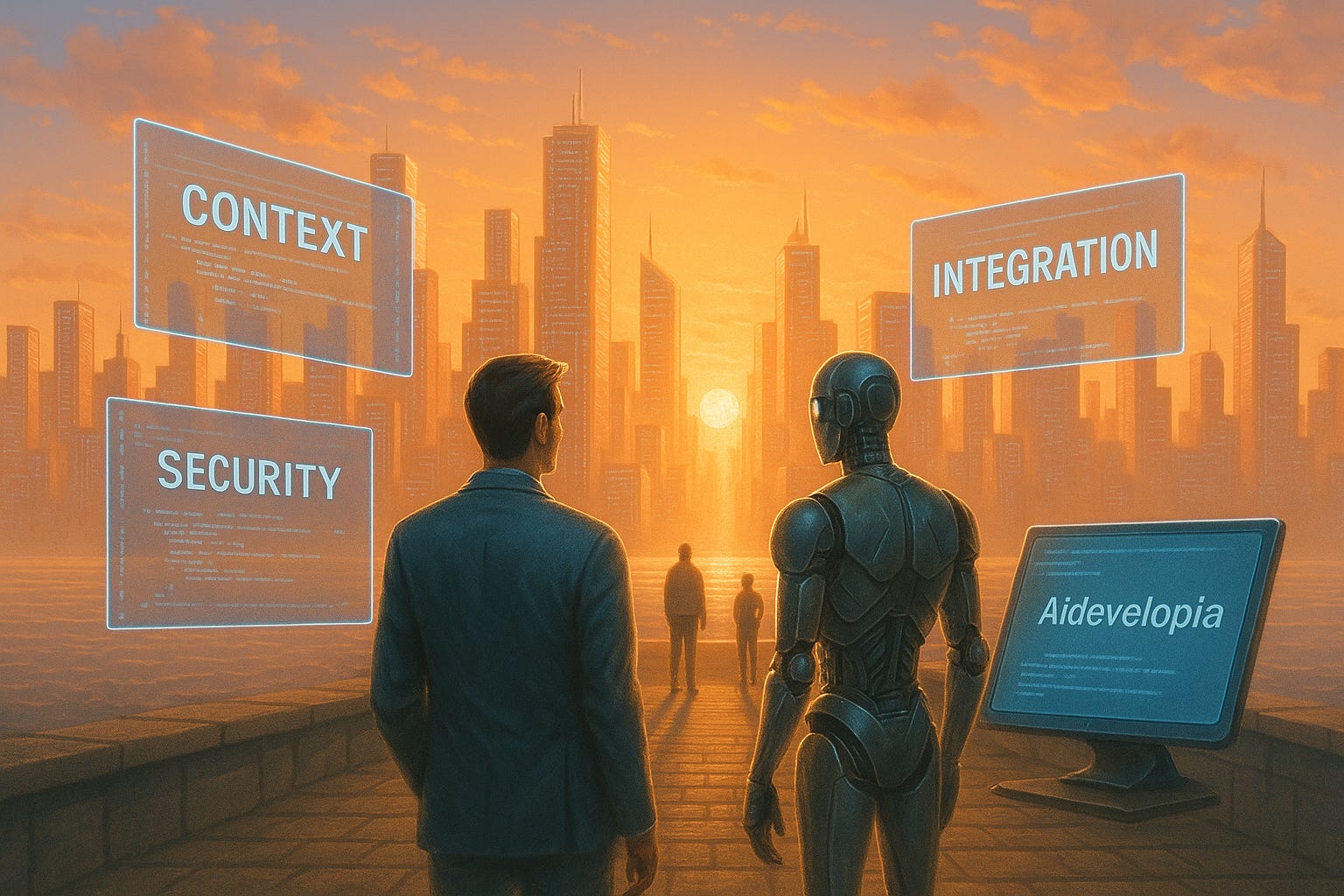
In summary, the recent surge of AI-driven “vibe coding” has indeed empowered developers to prototype and release quickly. But numerous examples from the Tea app data leak to AI agents erasing databases show the dark side of shipping without caution. Many experts emphasize that human oversight, testing and good engineering discipline are still essential. Otherwise, the rush to ship may leave a trail of technical debt, security incidents, and developer burnout in its wake.
☕ If this hit you, consider buying me a coffee or joining the Aidevelopia Discord.
👉 Join the crew here →
So if you’ve been waiting for a sign to start exploring AI beyond prompts — this is it.
👉 Try Aidevelopia free for 30 days
👉 Build your own AI bot or community assistant
👉 And join us on Discord — https://discord.gg/PRKzP67M
If you missed my last article, no worries—read it here

Sources: Cited analyses and news reports (including Business Insider, SiliconANGLE, Fastly, and industry blogs) document these incidents and trends, providing the context and expert commentary above.