

When AI Detectors Do More Harm Than Good
imagine writing something so good, AI thinks it wrote it

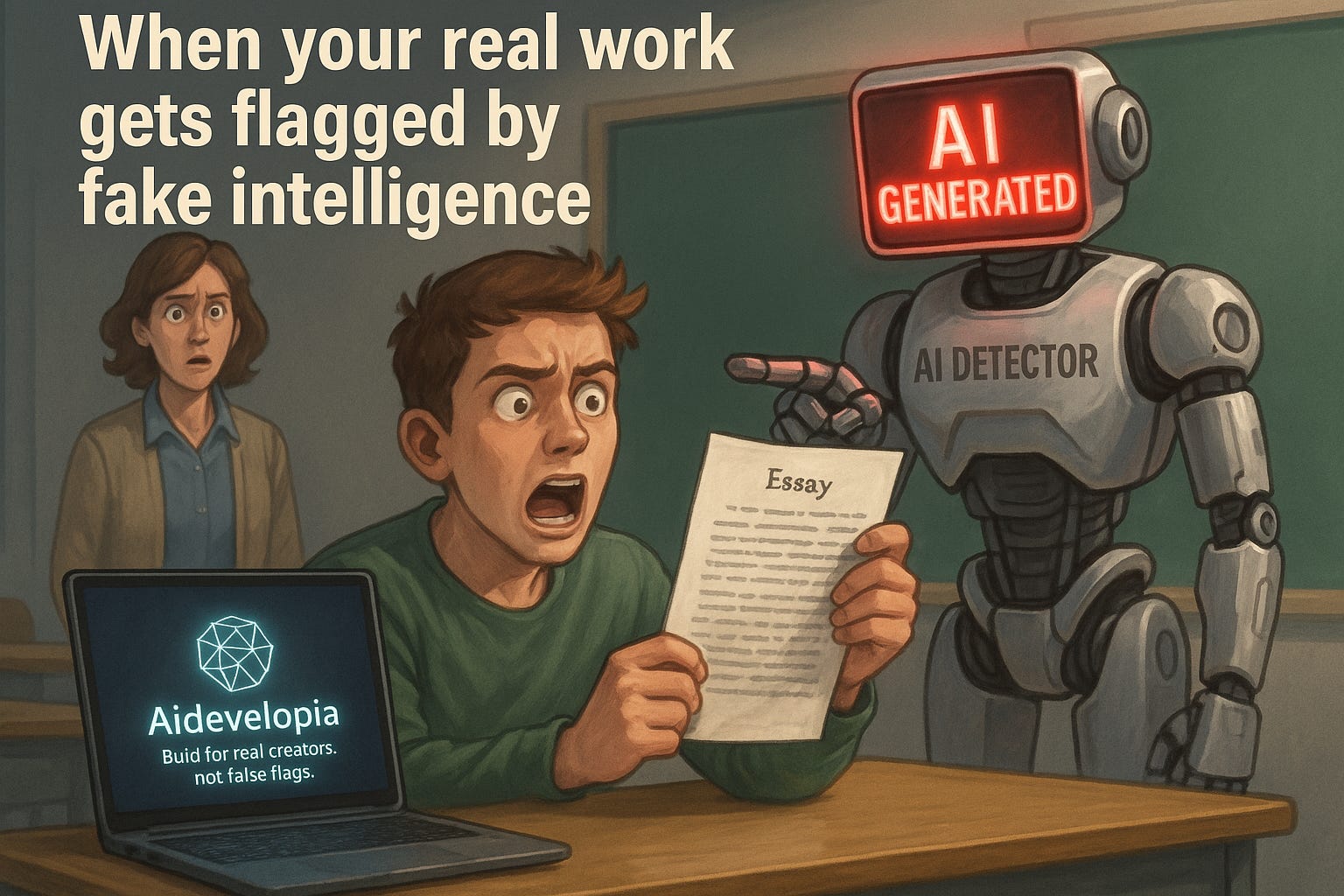
Let’s start with this: imagine writing something so good, AI thinks it wrote it.
That’s where we are now in a world where being too articulate, too consistent, or too clear can get you flagged by an algorithm.
When AI detectors first came on the scene, they promised to save us. The pitch was simple:
“We’ll catch the cheaters, protect the creatives, and restore trust in what’s real.”
But here’s the uncomfortable truth that promise fell apart faster than you can say “plagiarism check.”
The Accuracy Problem: When Fairness Becomes a Coin Toss
AI detectors, as it turns out, are terrible at their job.
Many perform no better than flipping a coin wrongly flagging human work 25–30% of the time. Even the so-called “premium” ones barely cross 50% accuracy.
OpenAI themselves scrapped their own detector for one reason: it just wasn’t reliable enough.
Now imagine being a student you spend hours writing a paper, only to get an email saying, “We think AI wrote this.”
That’s not a warning. That’s a label. And once it sticks, it can ruin lives.
False positives don’t just hurt grades; they crush confidence. Stress, anxiety, reputation damage , all because a machine got confused by your sentence structure.
And if you think this only affects students, wait until you realize these detectors are also being used in hiring, publishing, and content moderation.
We’ve entered the era of AI judging humans and humans losing.
⚖️ The Bias Problem: When AI Targets the Vulnerable
Here’s where it gets even uglier.
AI detectors are biased not hypothetically, but measurably.
They’re more likely to flag non-native English speakers, neurodivergent writers, and people whose voices don’t fit “standard” language patterns.
Black students, for instance, are statistically more likely to be accused of AI plagiarism due to linguistic and dialect bias.
So instead of creating a fair system, these tools end up punishing diversity in expression.
And this is where I get heated , because creativity isn’t one accent, one structure, one rhythm. It’s messy, expressive, unpredictable. That’s the whole point.
When we make machines the arbiters of what sounds “human,” we start stripping humanity out of writing itself.
If you’ve ever toned down your writing just to sound “safe,” you’ve already felt the pressure of invisible AI policing.
If you read this far, I rate you heavy. 🙌🏾
Please like, share, or subscribe — it keeps this whole movement alive.
(And yeah, this one’s free. I’ve done the heavy lifting. So share it, my G.)
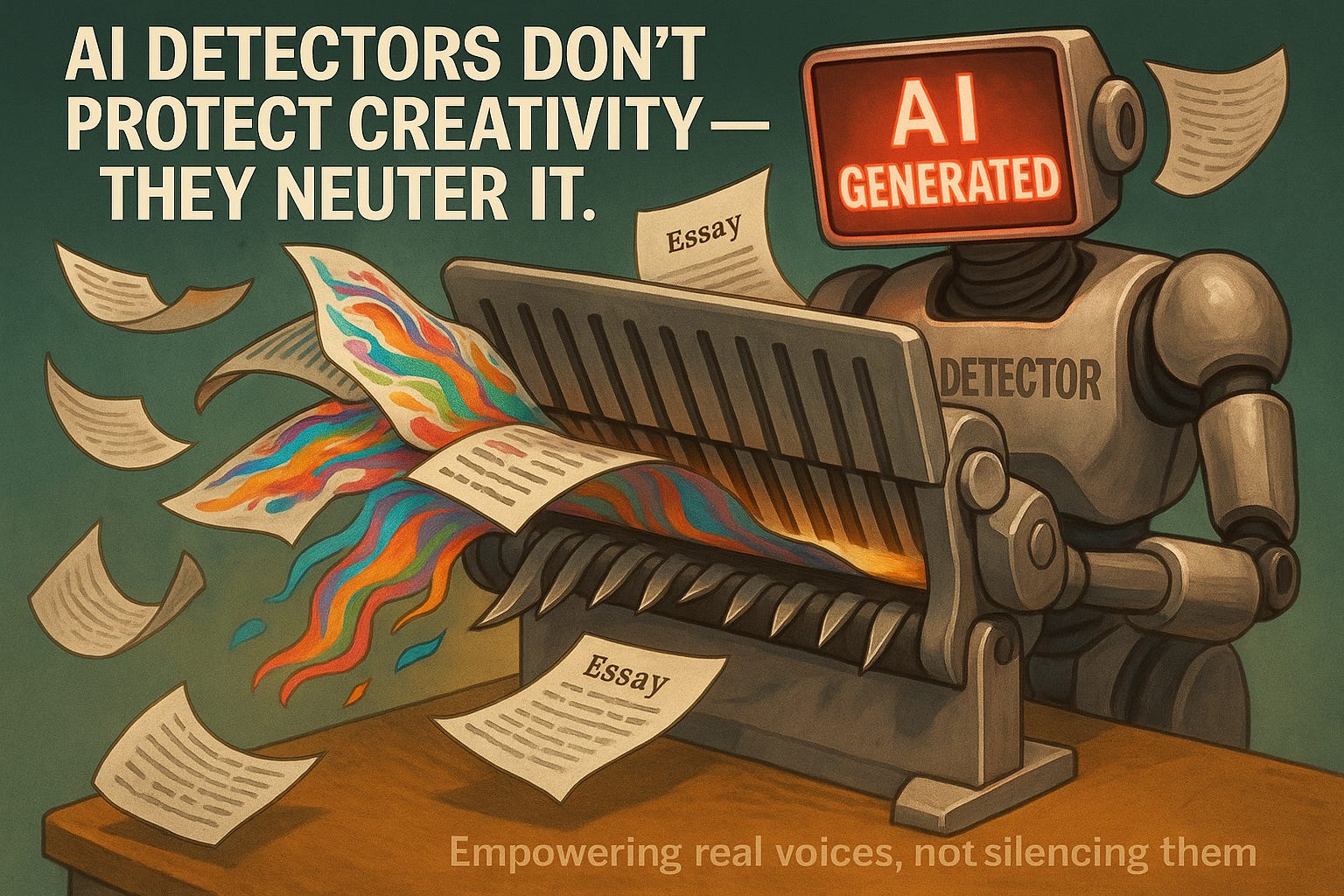
The Creativity Crisis: Policing the Wrong Problem
Let’s talk about what we’re really losing here.
Creativity thrives on risk. On breaking structure. On bending rules just enough to make something new.
But when writers, students, or even devs fear being falsely flagged, they start playing it safe writing in predictable, formulaic ways.
And that’s the quiet tragedy.
We’re raising a generation of creators afraid to sound too human.
Because the algorithm might not “believe” them.
Meanwhile, AI-generated content that’s slightly rephrased or disguised slips through easily. So who’s actually being caught?
Not the cheaters. Just the honest ones.
This is how AI detectors, tools meant to protect creativity — are now slowly killing it.
Aidevelopia: Building AI That Amplifies, Not Polices
At Aidevelopia, we’ve been thinking about this a lot.
We didn’t build AI to detect creativity , we built it to enhance it.
Our bots don’t judge your tone, grammar, or “humanity score.” They learn your style, your process, and your intent and help you automate the parts that block your flow, not the parts that make you you.
With our new Telegram bot, for example, teams can now connect their FAQs, docs, and community chats into one intelligent assistant. It handles context, answers, and feedback, while you focus on the creative work that actually matters.
It’s the opposite of an AI detector.
It’s an AI amplifier.
And if you’ve been following this journey you know what’s next.
💡 We’re offering a 30-day free trial right now.
Because we believe every builder, creator, and dev should have tools that make their ideas louder not smaller.
The Real Fix: From Policing to Partnership
AI detectors won’t save creativity.
Better collaboration will.
The future belongs to systems that co-create with humans, not monitor them.
We need to move from punishment to participation. From suspicion to support.
So instead of obsessing over who wrote what, let’s start asking how we can write better — together.
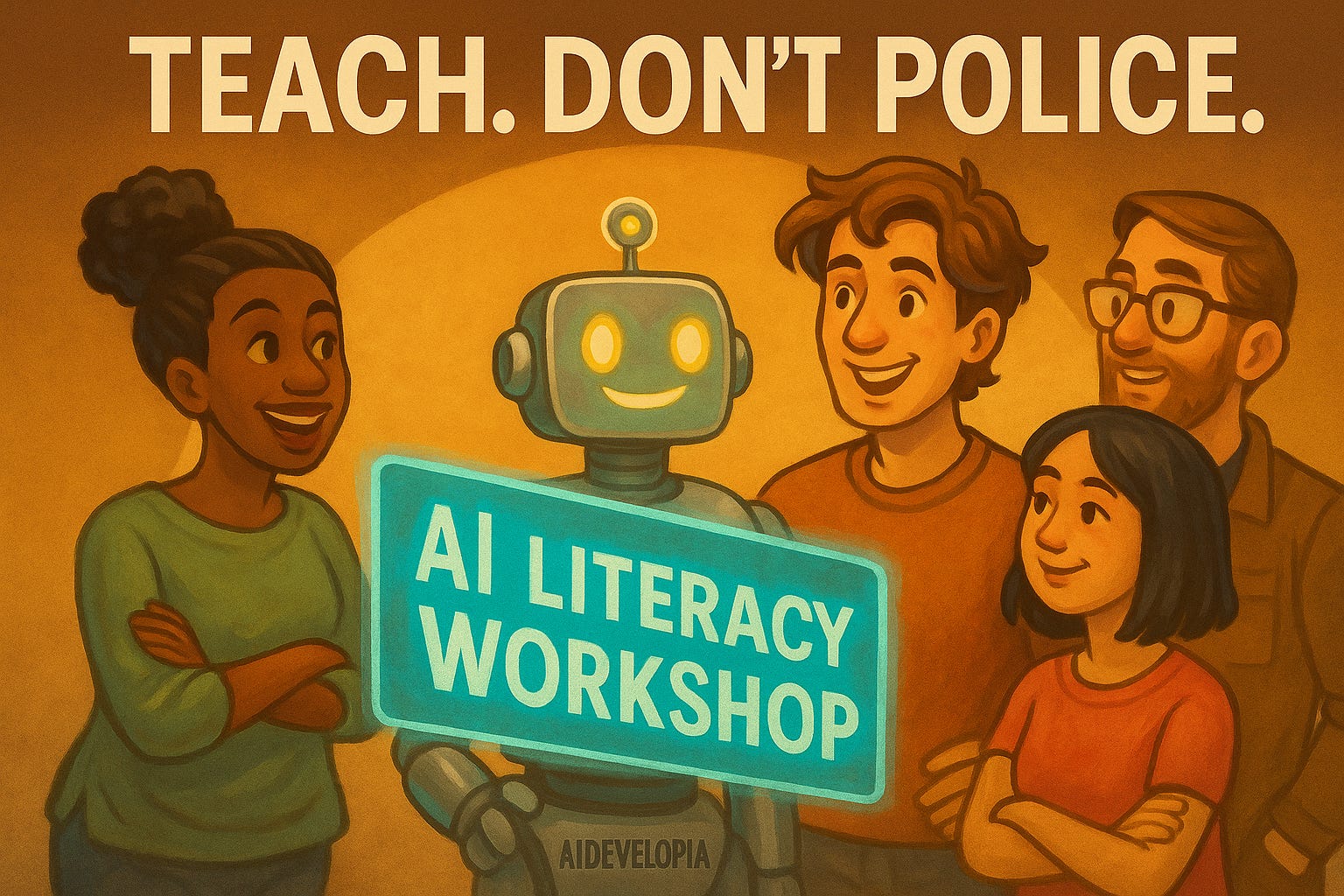
If education systems focused more on teaching AI literacy instead of enforcing AI fear, we’d see students who know when and how to use these tools ethically, rather than hiding them like contraband.
It’s time we stop treating technology like a threat — and start shaping it with intention.
Final Thought
The irony?
AI detectors were built to protect human creativity.
But in their obsession with catching machines, they forgot what makes us human in the first place.
Creativity isn’t proof of humanity. It is humanity.
And the more we let algorithms judge that, the more we lose the spark we’re trying to save.
So yeah, maybe the question isn’t “Can AI detect humans?”
Maybe it’s “Can humans still detect each other?”
☕ If this hit you, consider buying me a coffee or joining the Aidevelopia Discord.
👉 Join the crew here →
It’s about building a future where tech remembers its purpose: to make us more human, not less.
Leave a comment and share your thoughts
So if you’ve been waiting for a sign to start exploring AI beyond prompts — this is it.
👉 Try Aidevelopia free for 30 days
👉 Build your own AI bot or community assistant
👉 And join us on Discord — https://discord.gg/PRKzP67M
If you missed my last article, no worries—read it here

This happened to my son when he was in school. His teacher ran it though an AI detector and said it was AI. He would purposely “dumb down” his writing after that. This prompted me to put some of my writing through various AI detectors, and it flagged a lot of my articles as being written or partially written by AI as well.
I used to think AI detectors were meant to protect creativity, but now it feels like they’re slowly killing it. Imagine being flagged just for writing too well—it’s insane.Oh man ..